
 Local Journalism Initiative
By Sonal Gupta, Local Journalism Initiative Reporter, Canada’s National Observer
The BC Supreme Court has set aside the transfer of a major forest licence in northwestern BC after ruling the province failed to properly consult to arrange a fair deal.
The province granted the license to the Kitsumkalum First Nation in 2024 after Skeena Sawmills went bankrupt.
The province’s top court ruled the province breached its duty to consult the neighboring Gitanyow, because that First Nation also wanted to buy the sawmill in 2023.
“Those commitments relate directly to the exercise of the Aboriginal right and the loss of those commitments clearly impacts Gitanyow’s future enjoyment and exercise of their rights. I would not characterize those impacts as minor.”
Justice F. Matthew Kirchner
In a decision released on Jan. 7, Justice F. Matthew Kirchner ordered the province to restart the consultation. The proposed transfer would have granted Kitsumkalum, another First Nation based near Terrace, the timber rights in the Lax’yip — territory that the Gitanyow Hereditary Chiefs are already pursuing through their title claim and negotiations with the province.
Justice Kirchner noted the province transferred the license despite its binding obligation to consult Gitanyow. “Those commitments relate directly to the exercise of the Aboriginal right and the loss of those commitments clearly impacts Gitanyow’s future enjoyment and exercise of their rights. I would not characterize those impacts as minor,” he wrote in the decision.
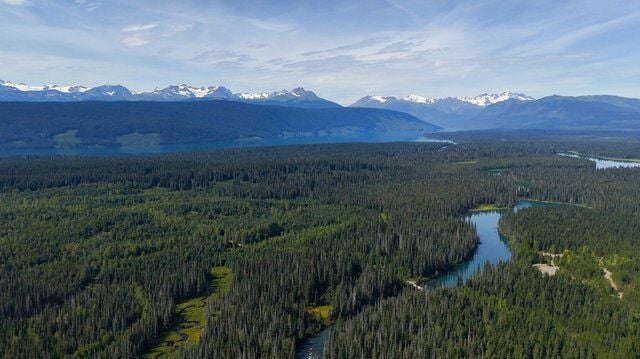
The licence covers timber harvesting in the Nass Timber Supply Area, located near the upper Nass and Skeena rivers about 250 kilometres northeast of Prince Rupert. The remote, forested expanse is central to overlapping traditional lands for several Indigenous nations and fuels northern BC’s forestry economy. It was being transferred from the bankrupt Skeena Sawmills Ltd. to a company owned by the Kitsumkalum First Nation through court-supervised bankruptcy proceedings.
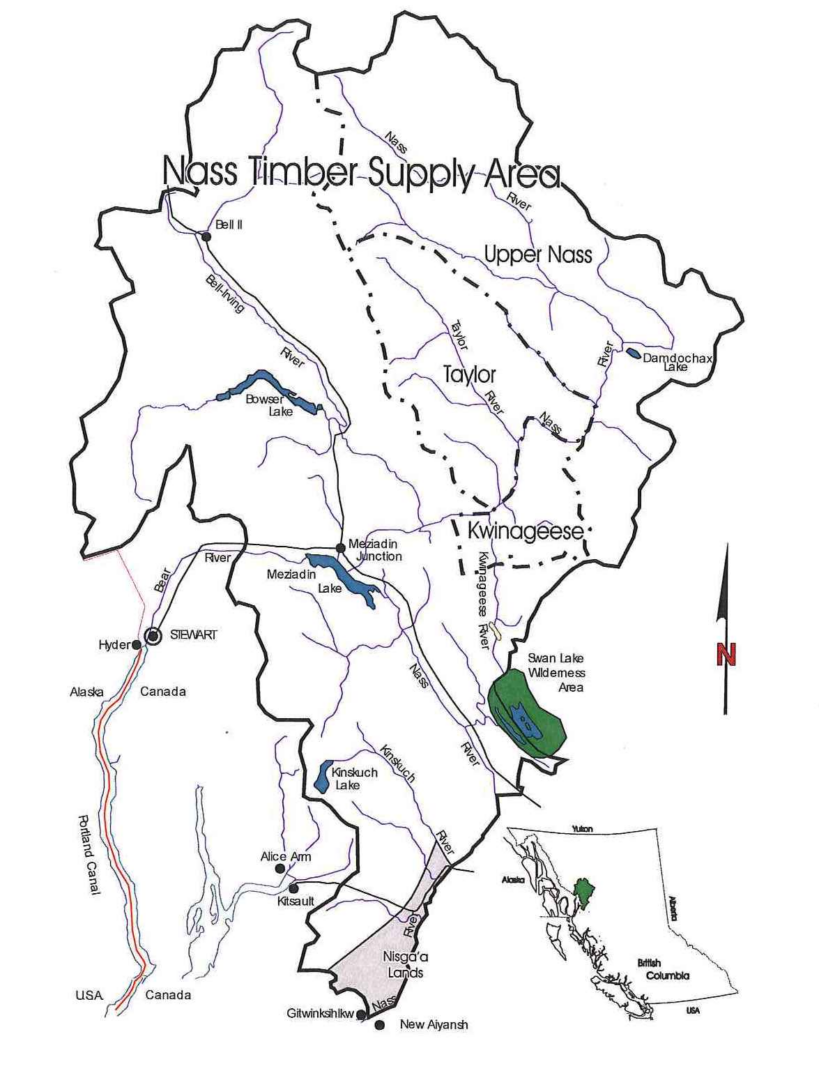
The Nass Timber Supply Area spans approximately 1.6 million hectares in northwestern British Columbia. Photo credit: Government of BC
But the court found the province did not hold substantive meetings with Gitanyow, relied almost entirely on letters and emails and moved to a decision without a proper two-way dialogue. On July 4, 2024, provincial officials believed they had sent a reply to a Gitanyow letter, but because of an error in entering the recipients’ email addresses, the message was never received.
Joel Starlund, executive director of the Gitanyow Hereditary Chiefs said the province had called the impact “minimal” because no new harvesting rights were created and only the licence holder changed. “The judge, as you can see in the decision, strongly disagreed with that,” he said.
The province also assumed it could not meaningfully accommodate Gitanyow in a licence transfer decision and was “hopeful” that Gitanyow and Kitsumkalum would sort things out later.
Gitanyow tried to negotiate directly with Kitsumkalum, offering to buy the licence at fair market value and supply Kitsumkalum with timber if it revived the mill in Terrace. Starlund said Gitanyow sought provincial help to craft a solution benefiting both nations, but efforts to collaborate with the province failed.
Justice Kirchner found that the obligation to consult and, where necessary, accommodate Indigenous rights rests with the Crown itself and cannot be transferred to a third party — even another Indigenous nation — through private, business-to-business talks.
“If we have a positive declaration of title, a majority of our assets will have already been given away, and in effect we will have an empty box.”
Joel Starlund, Executive Director of the Gitanyow Hereditary Chiefs
Gitanyow First Nation has filed a title claim over its 6,200-square-kilometre territory in the Nass and Skeena watersheds, originally set for 2025, but delayed on procedural grounds.
Justice Kirchner cited the 2014 Tsilhqot’in Nation v. British Columbia decision, where the Supreme Court of Canada warned governments that when an Indigenous land claim is strong and approaching a ruling, they must take care not to dispose of lands and resources in ways that could undermine future title findings. He noted that Gitanyow’s title claim is further along than most and demands extra caution from the province.
“If we have a positive declaration of title, a majority of our assets will have already been given away, and in effect we will have an empty box,” Starlund said.
Gitanyow has been involved in forestry “for well over 100 years,” Starlund said. He added the nation logged actively from the early 1900s until the 1950s, when large corporate licences and the new tenure regime “really pushed out” Gitanyow participation, Starlund said.
Today, the Nation holds a smaller licence that supplies fibre to the Kitwanga Lumber Products mill about 20 kilometres away.
The 2022 Incremental Reconciliation Pathway Agreement with BC was intended to advance recognition of Gitanyow rights and title, committing to increasing Gitanyow’s share of timber harvesting in its territory, with a target of the Nation holding 35 per cent of the allowable annual cut in the Gitanyow Lax’yip.
Starlund said the licence in question was one of the few realistic ways to reach that target. When Skeena Sawmills went under, Gitanyow tried to work with the province and the court-appointed receiver to “hive off” the licence so they could bid directly, but the assets were bundled and sold as a package, effectively excluding them.
“We’re not just trying to grab it for no reason, we have plans for it.”
Joel Starlund, Executive Director of the Gitanyow Hereditary Chiefs
Starlund said the licence is central to the Nation’s Land Use Plan and economic development strategy. The Nation’s Land Use Plan, adopted under Gitanyow law in 2010 and mirrored in provincial law in 2012, sets clear zones for development and conservation. Since 2011, under a Recognition and Reconciliation Agreement, Gitanyow and the province have reached consensus on 87 per cent of decisions in their territory.
Starlund said media commentary often wrongly frames Indigenous rights as a barrier to economic development, but the Nation is leading a proposal for a bioenergy and pellet plant in its northern territory that would use low-value pulpwood and sawmill waste. While two investors have withdrawn because Gitanyow could not secure long-term fibre, a third is waiting.
“We’re not just trying to grab it for no reason, we have plans for it,” he said.