 Alan Haig-Brown
I have a birthday coming up this fall. Eighty-five years old. Eighty-five years of life in British Columbia surrounded by one of the world’s major forest industries. My earliest memories were forged walking home from school in Campbell River and crossing the Elk River Timber Company train tracks. If we were lucky, we might be in time to see the huge “Five-Spot” locomotive come through town with a string of skeleton cars loaded with huge old-growth logs.
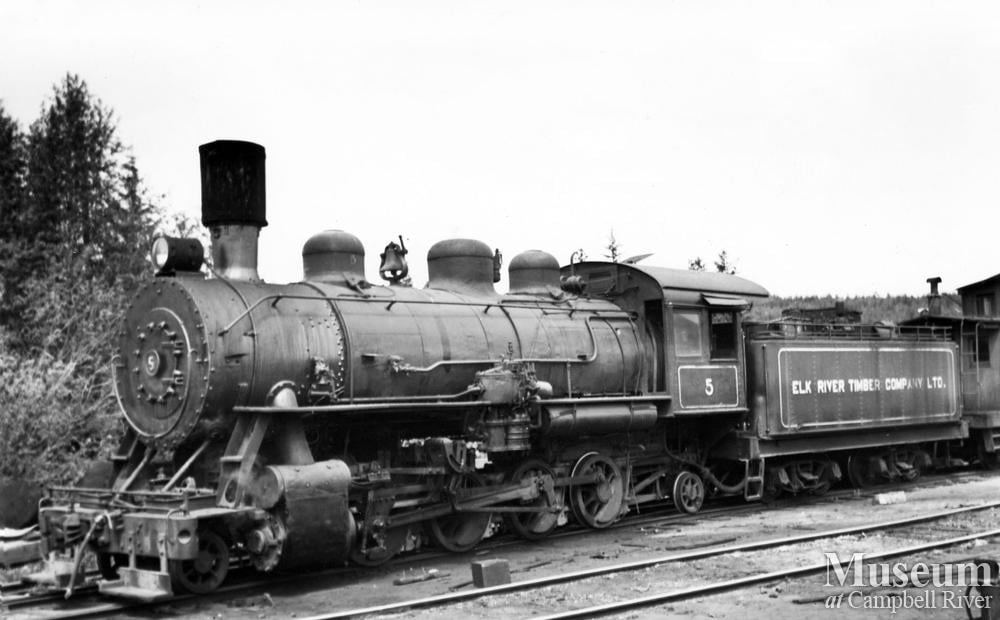
Elk River Timber Co.’s 5-spot locomotive, a Porter 2-8-2. Photo: Museum at Campbell River
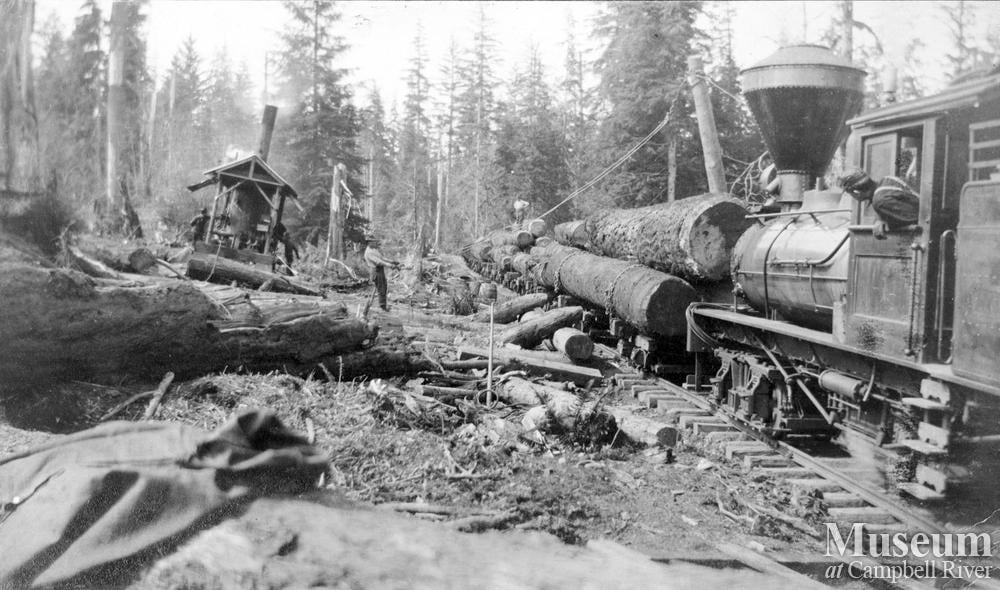
We learned to recognize an occasional “Three Log Load” made up of two big logs and a single huge log set on top. This is the sort of knowledge that delights children on the way home from school.
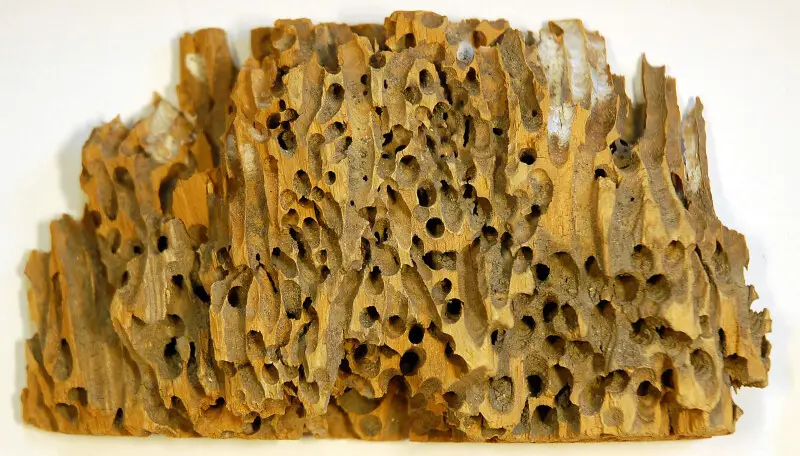
Forty years later, I was writing commercial marine stories on the BC coast and the Fraser River. It was the late 1980s, and railroad logging was pretty much gone from the coast. Bundle booms of smaller logs, especially heavy balsam and hemlock, were being towed by tugs into the Fraser’s North Arm. Convenient for buyers, and the freshwater storage would defeat the nasty boring teredos (shipworms). All of this added to my lifetime of BC forest industry knowledge. Not enough to make me a forester, but maybe a little more than the average citizen.
I learned about the process of sawing “kants” to conform to the provincial requirement that all logs had to be “processed” before export. So, a slab was sawn off four sides of a raw log. Not lumber yet, but processed enough to conform to the law that claimed to keep BC logs for BC jobs. High labour costs in a unionized industry were blamed for this workaround of a well-intentioned law. Corporate profits were the more likely motivation.
In the early 1990s, the local Caterpillar dealer asked me to write a story about Interfor’s highly automated mill. Linck mill equipment had been imported from Germany and installed on a vacant piece of land on Lulu Island beside the Queensborough Bridge. Interfor’s $60 million mill used computer technology to maximize lumber recovery from each log. In operation for about ten years when I visited, the mill sorted the hemlock and balsam logs to size as they came out of the river. They were then stored in separate sections of the log yard. When the mill received an order for lumber of a certain dimension, the computer system was informed, and logs with specific dimensions were selected to maximize yield. Order specifications could be in metric or Imperial dimensions. It took only 30 minutes to reprogram the mill from one order to another. A normal mill run was four or eight hours depending on market orders. The mill reportedly produced about 350,000 board feet of finished lumber (FBM) from up to 4,000 logs per eight-hour shift.
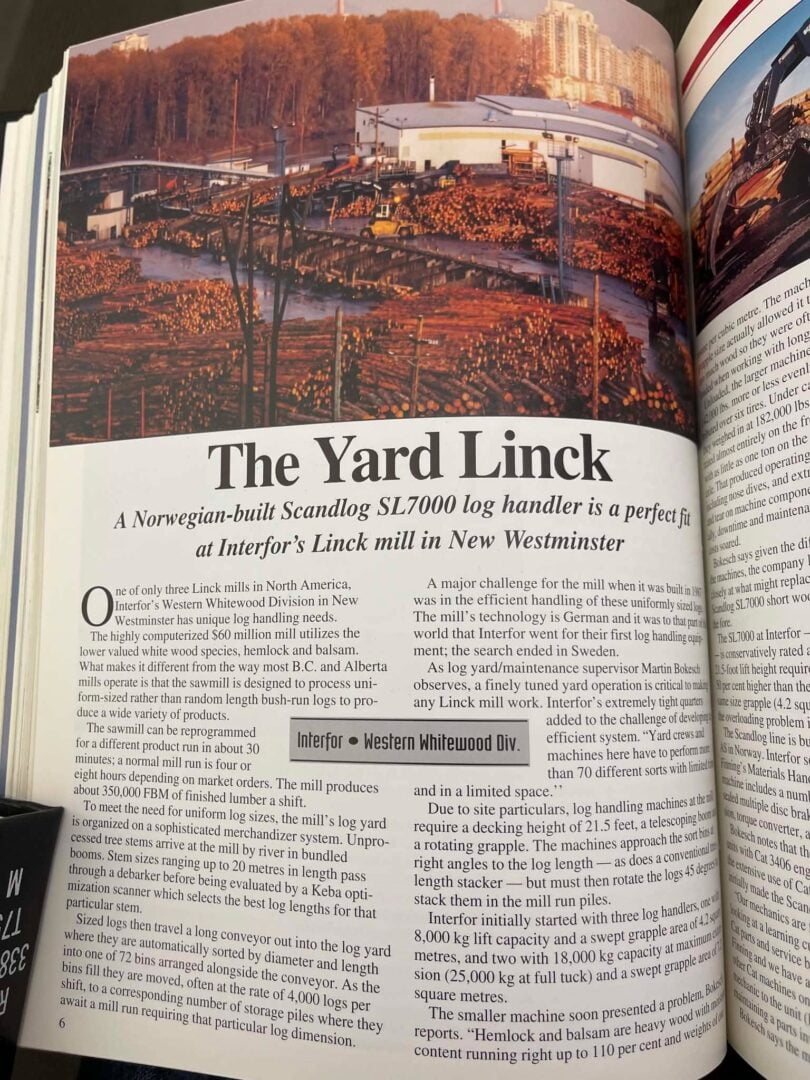
I don’t recall the numbers exactly, but the recovery of value-added lumber was increased from about 70 percent to 85 percent. With a relatively small workforce, this computerized mill could produce wood competitively on the world market. I was impressed.
There was a little downturn in the international lumber market in the early 1990s. The forest company lobbyists in Victoria got to work. The Provincial government announced a temporary suspension of the requirement to do even some processing of round logs. Soon, ships were loading round logs at the Fraser River port and several other ports along the coast. By 2000, the temporary measure had morphed into a routine.
Not only were round logs being exported, but Interfor’s beautiful mill was taken apart and exported to a more progressive country. So while the corporations pleaded to save logging jobs by exporting round logs with one hand, they were, with the other hand, exporting the sawmills that had been required to cut them.
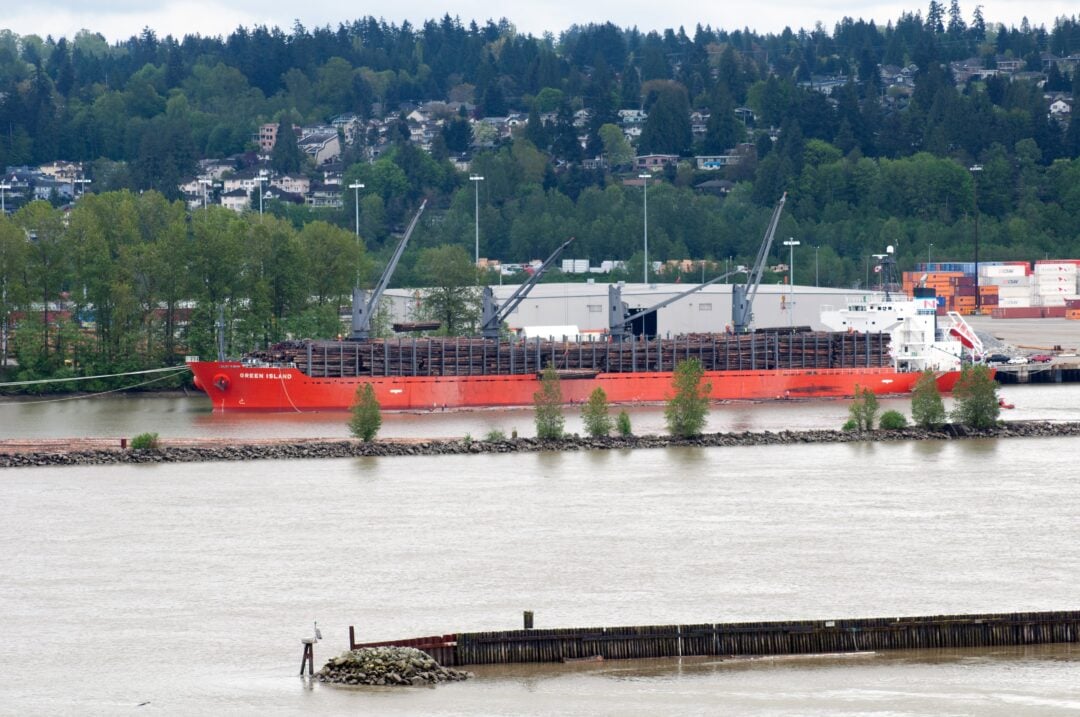
I think back to my childhood watching that logging train. Did I wonder what it was like in the old-growth forests that it was hauling out? Will my grandchildren see old-growth forests, or will they see young second-growth poles being loaded on ships for export? The site of the Linck mill is now a warehouse and a parking lot. Like the old-growth forests and the jobs, “You don’t know what you’ve got ‘til it’s gone!”